For the last three years, generative AI was largely a novelty—a hyper-competent chatbot that drafted emails, synthesized PDFs, and helped engineers fix buggy code. But in 2026, the technology landscape has fundamentally shifted. We’re no longer just prompting AI; we’re delegating entire end-to-end workflows to agentic AI systems.
Rather than waiting for a human to type step-by-step instructions, agentic AI operates with context-aware autonomy: it plans, calls external tools, reflects on mistakes, and executes multi-step objectives across complex software environments.
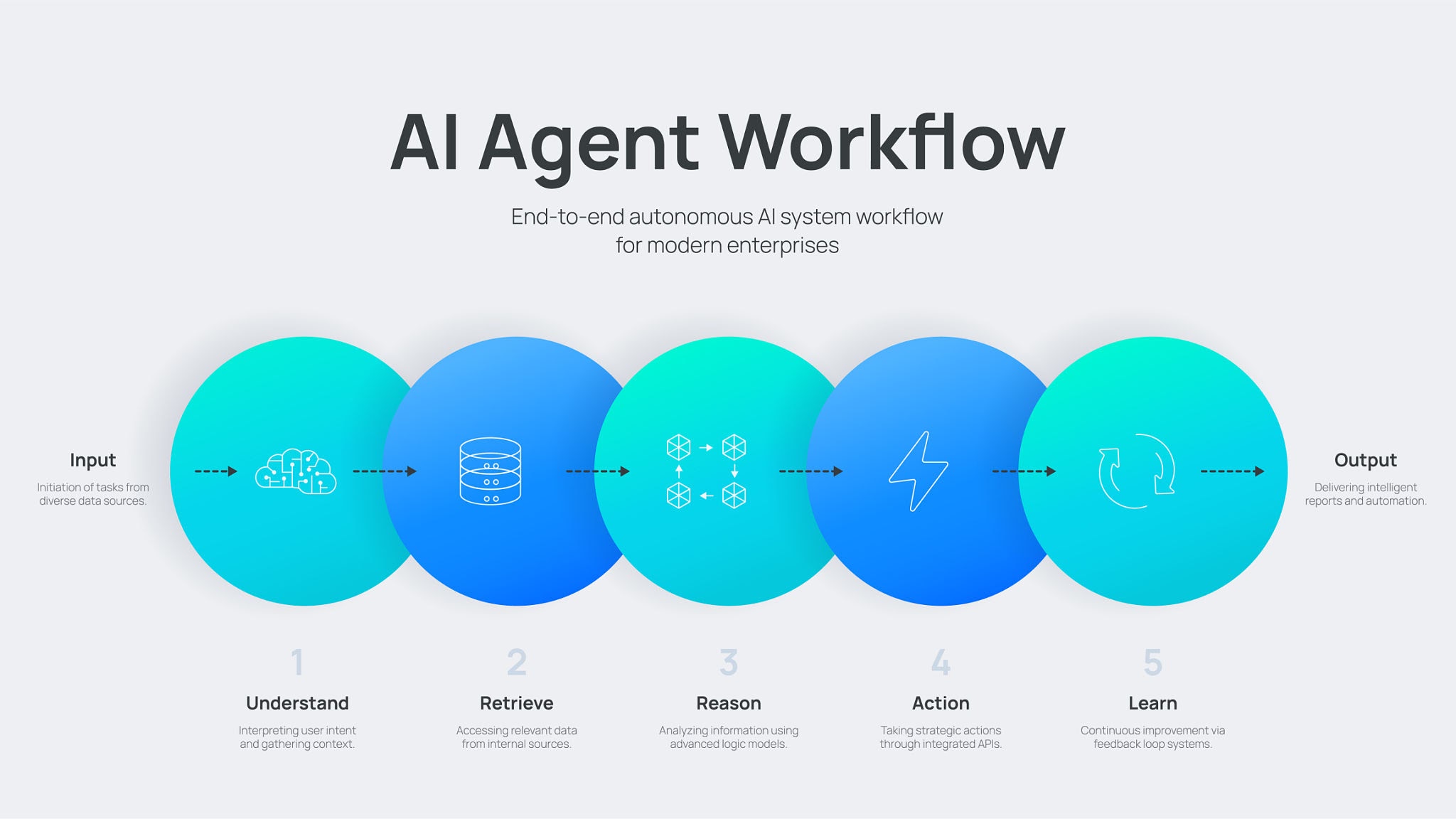
Key Takeaway: Notice how the agentic pipeline moves beyond simple text generation. It processes an input, analyzes system states, reasons through logic gates, takes external actions via APIs, and adapts continuously based on output validation.
The Paradox of Enterprise AI Spend
As organizations scale their reliance on autonomous agents, they are encountering a surprising macroeconomic trend: the AI inference cost paradox.
While the raw cost per token has plummeted drastically, total enterprise AI infrastructure spending has spiked. Why? Because agentic workflows loop recursively—running multiple reasoning chains, API calls, and self-evaluations behind the scenes for every single task.
3 Pillars Driving Agentic AI in 2026
- Multimodal Reasoning at the Edge: Modern agents don’t just process text—they analyze support screenshots, real-time video feeds, and system audio simultaneously to make split-second decisions.
- Permission-Aware Enterprise RAG: Retrieval-Augmented Generation (RAG) has evolved. Agents query secure company databases while strictly respecting department permissions and data fresh constraints.
- Continuous Observability: Because agents act autonomously, engineering teams treat them like software microservices—monitoring schema drifts, step failures, and latency in real time.


Leave a Reply